






How to Choose Vibratory Finishing Media by Application, Material and Part Geometry
Choosing the right vibratory finishing media is fundamental to developing an effective and repeatable mass finishing process.
But there is no single finishing media that is right for every component.
The most appropriate media depends on three fundamental questions:
1) What do you need the finishing process to achieve?
2) What material is the component made from? And
3) What is the size and geometry of the part?
These factors influence the media characteristics, abrasive action, shape and size required to produce the desired result.
At ActOn Finishing, we consider media selection as part of the complete finishing process. The machine, media, compound and process parameters must work together to achieve the required surface condition consistently.
This guide explains how manufacturers can approach vibratory finishing media selection by application, material and component geometry.
What Is Vibratory Finishing Media?
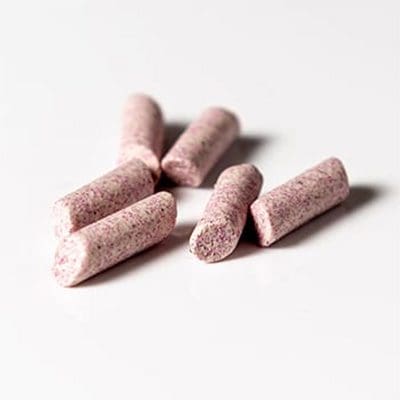
Vibratory finishing media looks like stones and can be made from ceramics, plastic, steel, wood or agro media. It is placed in the finishing machine with the components being processed.
As the machine generates its characteristic vibratory motion, the media interacts with the component surfaces to produce the required finishing action.
Depending on the process, media can support applications including:
- Deburring.
- Edge radiusing.
- Descaling.
- Grinding.
- Surface smoothing.
- Cleaning.
- Burnishing.
- Polishing.
The type of media is important, but it is only one part of the selection process.
A useful starting point is to choose finishing media in three stages: application first, component material second and part geometry third.
This provides a much more application-specific approach than choosing media based on type alone.
1. Choosing Vibratory Finishing Media by Application
The first question should always be:
What does the finishing process need to achieve?
A component requiring burr removal has a different finishing objective from one requiring a smooth or polished surface.
Understanding the required outcome helps determine the type and level of finishing action needed.
1. Vibratory Finishing Media for Deburring
Deburring is one of the most common applications for vibratory finishing media.
Burrs left after machining, cutting, stamping or other manufacturing operations may need to be removed before the component can progress to its next production stage.
When choosing media for deburring, consider:
- Component material.
- Size and location of the burr.
- Required edge condition.
- Part geometry.
- Required surface finish.
- Areas of the component the media needs to reach.
The objective is to provide sufficient finishing action to remove the unwanted burr while achieving the specified condition of the component.
Media shape and size can become particularly important when burrs are located around holes, slots, corners or other detailed features.
2. Vibratory Finishing Media for Edge Radiusing
Some applications require more than removing a burr. A controlled radius may need to be created on the component edge.
The media therefore needs to interact effectively with the relevant edges while delivering the required finishing action.
Media selection should be considered alongside variables including processing time and machine settings because these collectively influence the finished component.
Where a particular result is required, testing the component through a finishing trial can help establish the appropriate process parameters.
- Ceramic media – usually the first choice when you need effective edge radiusing and material removal. It is relatively hard, dense and available in different abrasive grades. Good for steel, stainless steel, titanium and other hard metals.
- Plastic media – provides a gentler, more controlled cutting action. Particularly useful for aluminium, brass, zinc and softer materials, or where you want to radius edges without excessive stock removal or impingement.
- High-density ceramic / specialty abrasive media – useful when you need faster or more aggressive radiusing, particularly on hard alloys.
3. Media for Grinding and Surface Smoothing
Vibratory finishing can also be used where components require greater surface refinement.
The objective may be to reduce surface irregularities, improve the starting condition of a component or prepare it for a subsequent finishing operation.
In these applications, media selection should take account of the required level of cutting action as well as the final surface condition.
A more aggressive finishing requirement may need different media characteristics from a fine surface finishing process.
4. Vibratory Polishing Media
Polishing presents a different objective again.
Rather than focusing primarily on material removal, the process is intended to progressively refine the component surface and produce the specified finish.
Media selection must therefore reflect the required degree of surface refinement.
Depending on the starting condition and required finish, a component may also require multiple finishing stages, with initial deburring or smoothing followed by finer finishing or polishing.
The correct media and compound combination is particularly important when developing these processes.
- Porcelain media – excellent for smoothing, polishing and producing a bright finish with very little material removal. Often used after an abrasive cutting stage.
- Fine-grade ceramic media – useful when you still need some light cutting action while reducing surface roughness and smoothing machining marks.
- Fine-grade plastic media – provides gentle smoothing, particularly suitable for aluminium and softer metals, with lower risk of impingement.
- Porcelain media – one of the most common choices for polishing and high-lustre finishing. Its hard, smooth surface burnishes the component with minimal material removal.
- Steel media – excellent for burnishing and bright polishing suitable metals. Available in shapes such as balls, pins and satellites to reach different geometries.
- Organic media such as corn cob or walnut shell – typically used in dry polishing, often together with a polishing paste or compound. Particularly useful as the final stage for achieving a high-gloss surface.
5. Media for Cleaning and Surface Preparation
Vibratory finishing processes can also support component cleaning and surface preparation.
Combining media and compounds can support processes including cleaning, degreasing and descaling as well as deburring, polishing, radiusing and surface smoothing.
- Ceramic media – good for more aggressive cleaning, particularly removing oxidation, light rust, scale and stubborn surface contamination. Because it is abrasive, it will also perform some material removal.
- Plastic media – suitable for gentler cleaning, especially on aluminium, brass and softer components where you want to minimise surface alteration.
- Non-abrasive media – useful when the primary objective is cleaning rather than cutting or changing the component geometry.
- Steel media – can help clean and burnish simultaneously, leaving suitable metal components brighter after processing.
- Compound + water – particularly important for cleaning. The compound helps degrease the components, suspend contaminants, prevent redeposition and flush debris from the process.
For each application from above if you don’t choose a corect compound you don’t get the correct result. so for example if you polish parts in stainless steel media but use a deburring compound you will not achieve te required result. so, I would create either a different blog about compounds or a different section in this blog about the importance of compounds.
2. Choosing Finishing Media by Component Material
Once the application has been established, the next question is:
What is the component made from?
The material being processed affects how the component responds to the finishing action.
Important considerations include:
- Material type.
- Material hardness.
- Starting surface condition.
- Required material removal.
- Required final surface condition.
- Component tolerances.
The same media and process parameters should not automatically be assumed to be suitable for every material.
ActOn‘s range includes different finishing media designed for different processing requirements. For example, our ceramic media is generally recommended for components manufactured from harder materials and is available in different abrasive grades according to the finishing requirement.
This is why the material and required result should be established before finalising the media specification.
Please use the below table to explain what media to use by material.
| Component material | Suitable finishing media | General guidance |
|---|---|---|
| Hard metals – stainless steel, hardened steel, tool steel, titanium, nickel alloys | Ceramic, high-density ceramic, porcelain, steel | Ceramic for cutting/deburring/radiusing; fine ceramic for smoothing; porcelain or steel for polishing/burnishing |
| Medium-hard metals – carbon steel, mild steel, cast iron | Ceramic, plastic, porcelain, steel | Ceramic for stronger cutting; plastic for gentler finishing; porcelain/steel for polishing |
| Soft metals – aluminium, brass, copper, zinc, magnesium | Plastic, fine ceramic, porcelain | Plastic is often preferred because of its gentler cutting action and lower risk of impingement; porcelain for polishing |
| Precious metals – gold, silver, platinum | Fine plastic, porcelain, steel, organic media | Fine/gentle media for surface refinement; porcelain or steel for burnishing; organic media for final polishing |
| Plastics / polymers | Plastic media, specialist fine abrasive media, organic media | Requires gentle processing to avoid scratching, deformation or excessive heat |
| 3D-printed polymers | Plastic or specialist media, organic media | Media/process needs to suit the polymer and printing technology; typically used for smoothing and surface refinement |
| Ceramics | Fine ceramic, porcelain or specialist media | Requires careful selection because ceramic components can be brittle and susceptible to chipping |
| Glass | Fine plastic or specialist media | Gentle processing is important to minimise scratching, chipping and breakage |
3. Choosing Finishing Media by Part Geometry
The third question is:
What is the size and shape of the component, and which surfaces need to be processed?
This is one of the most important aspects of media selection because the media needs to interact with the surfaces where finishing is required.
Components can contain:
- Holes.
- Slots.
- Corners.
- Cavities.
- Recesses.
- Internal and external features.
- Intricate profiles.
Vibratory finishing can process components containing corners, holes, cavities and slots. Selecting suitable media is an important part of achieving this effectively.
Why Vibratory Finishing Media Shape Matters
Finishing media is available in different geometries because component shapes and finishing requirements vary.
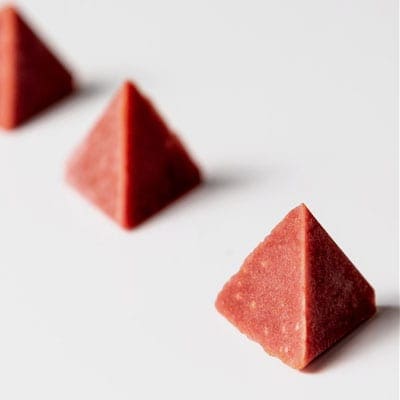
ActOn’s ceramic media range, for example, includes shapes such as:
- Angle Cut Triangles.
- Angle Cut Cylinders.
- Wedges.
- Stars and tristars.
- Ellipses.
- Arrows.
- Pyramids.
- Cones.
- Rhombuses.
- Balls.
Different media geometries interact with components differently.
The appropriate shape should therefore be selected according to the areas of the component that require processing and the overall part geometry. For example: for components which have corners, holes and slots both TriStar media and wedge media are recommended, minimising the possibility of media lodgement.
For surface improvement of hard to reach areas, an ellipse or cylinder shape can be considered. For example: for components which have corners, holes and slots both TriStar media and wedge media are recommended, minimising the possibility of media lodgement.
For surface improvement of hard to reach areas, an ellipse or cylinder shape can be considered.
A component with straightforward external surfaces may have different media requirements from a component containing multiple slots, recesses or intricate features.
Why Finishing Media Size Matters
Shape is only half of the geometry question. Media size also needs to be considered in relation to the component.
The media must be appropriately sized to interact with the surfaces that require finishing.
For components with holes, openings, slots or recesses, the relationship between media dimensions and component features needs particular attention.
Selecting media without considering the actual component geometry can prevent the desired surfaces from being processed effectively.
For this reason, ActOn manufactures ceramic media in a wide range of shapes and sizes to support components with different geometrical requirements.
Application + Material + Geometry: A Practical Selection Framework
Rather than asking simply “Which finishing media should I buy?”, manufacturers can make the selection process more effective by working through these three questions:
| Selection stage | Question to answer | What it helps determine |
|---|---|---|
| Application | What does the process need to achieve? | Required cutting, deburring, smoothing, radiusing or polishing action |
| Material | What is the component made from? | How the component is likely to respond to the finishing process |
| Geometry | Where does the media need to work? | Appropriate media size and shape |
| Validation | Does the process produce the required result? | Final media, compound, machine settings and processing parameters |
In simple terms, the right vibratory finishing media is selected by matching the required finishing application with the component material and part geometry, before validating the complete process against the required result.
This approach helps move media selection away from simply choosing a consumable and towards developing a complete, repeatable finishing process.
Don’t Choose Finishing Media in Isolation
Media is important, but it does not work independently.
The complete vibratory finishing process can involve variables including:
Component + machine + media + compound + media-to-part ratio + amplitude + processing time
Changing one variable can influence the final result.
Compounds can perform several functions during the process, including keeping components and media clean, removing dirt and oils, inhibiting corrosion and providing lubrication.
This is why the media and compound should be developed as part of the same process rather than specified independently.
How Do You Know Which Vibratory Finishing Media Is Right?
Technical specifications can narrow down the options, but the required result ultimately needs to be demonstrated on the component.
At ActOn Finishing, we use finishing trials to help establish the appropriate combination of:
- Finishing machine.
- Media.
- Compound.
- Media-to-part ratio.
- Machine parameters.
- Cycle time.
The trial provides an opportunity to test and refine these variables against the required surface finish before establishing a repeatable production process.
This is particularly valuable for components with unusual materials, complex geometries or demanding surface requirements.
FAQs
1. How do I choose the right vibratory finishing media?
Start with three factors: the finishing application, component material and part geometry. Establish whether you need to deburr, radius, smooth, clean or polish the component, then consider its material and the areas the media needs to reach. A finishing trial can then be used to validate the final media and process combination.
2. What is the best vibratory finishing media for deburring?
There is no single best deburring media for every component. The appropriate choice depends on factors including the component material, burr characteristics, required edge condition, geometry and target finish. Media should therefore be selected against the specific application.
3. Does the material of my component affect finishing media selection?
Yes. Component material and hardness affect how a part responds to the finishing process. The starting condition, required material removal, tolerances and target surface finish should all be considered. ActOn generally recommends ceramic media for components manufactured from harder materials.
4. How do I select finishing media for parts with holes, slots and recesses?
Consider both media shape and media size in relation to the component geometry. The selected media needs to interact effectively with the surfaces requiring treatment and be suitable for the component’s holes, slots, cavities, corners and other detailed features.
5. Can ActOn recommend and test vibratory finishing media for my parts?
Yes. ActOn can carry out a free finishing trial using your components to help establish the appropriate machine, media, compound and process parameters required to achieve a consistent and repeatable result.
Test Your Components with ActOn Finishing
If you are unsure which vibratory finishing media is right for your application, you do not have to make the decision from a catalogue alone.
Send ActOn Finishing your components together with details of the starting condition and required result. Our team can carry out a free finishing trial to help establish an appropriate media, compound, machine and process combination.
Whether the objective is deburring, radiusing, smoothing, cleaning or polishing, the process can be developed around your component rather than relying on a generic media recommendation.
Request a Free Finishing Trial
Call: +44 (0) 24 7646 6914
Email: sales@acton-finishing.co.uk