






Additive manufacturing has transformed the way products are designed and produced, with polymer 3D printing technologies such as Selective Laser Sintering (SLS), Stereolithography (SLA), and Fused Deposition Modelling (FDM) offering exceptional design freedom and rapid prototyping capabilities.
However, these processes often produce components with textured or rough surfaces that require improvement to meet visual and functional standards. Whether for consumer goods, automotive, or medical applications, post-processing is an essential step to improve appearance, surface roughness, and mechanical performance.
At ActOn Finishing, we provide complete surface finishing solutions for polymer additive manufactured parts – available as standalone systems or fully automated integrations. Our goal is to ensure our customers understand the advantages of each technology and achieve the perfect finish for every component.
The Importance of Post-Processing in Polymer Additive Manufacturing
Unlike traditional manufacturing, 3D printing produces parts layer by layer, which can result in visible layer lines, powder residue, and varying levels of surface roughness. Post-processing helps to:
- Remove printing residues or unsintered powder,
- Smooth and homogenize surfaces,
- Enhance the part’s appearance, and
- Improve performance characteristics like fatigue strength and sealing.
Through the right combination of blasting, mass finishing, and polishing technologies, ActOn Finishing delivers repeatable, efficient, and cost-effective finishing processes for all polymer-based additive manufacturing methods.
Step 1: AM Blasting Clean Technology – Deep Depowdering of Printed Parts
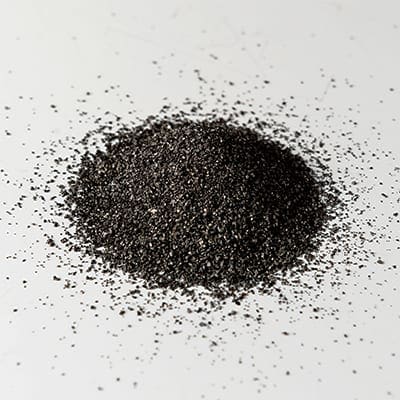
The AM Blasting Clean Series is designed for the de-powder stage of polymer 3D-printed parts. Using glass bead media, these machines achieve deep depowdering, even in areas where traditional round shot abrasives cannot reach.
The series includes four models, Excel, Solid, Smart, and Samba, each tailored to different production requirements. This technology ensures complete cleaning of SLS, SLA, and FDM parts, preparing them for the next stage of surface finishing.
Advantages:
- Thorough powder removal from intricate geometries,
- Clean, uniform surfaces, and
- Optimized for various component sizes and volumes.

Step 2: AM Blasting Smooth Technology – Homogeneous & Smooth Surface Finish
After depowdering, the next step is to refine the surface. The AM Blasting Smooth Series (Excel, Solid, Smart, and Samba) uses round abrasive media to shot peen 3D-printed polymer parts.
This process delivers a homogeneous, smooth surface with reduced porosity, which not only improves the part’s mechanical strength but also enhances the results of subsequent coloring or coating processes.
Key Benefits:
- Smooth, uniform surfaces,
- Reduced surface porosity, and
- Improved adhesion for coloring and coating.
Step 3: Surface Finishing and Polishing
Once cleaned and smoothed, polymer AM parts often require additional surface refinement and polishing to reach the quality standards expected by end users. ActOn Finishing has worked closely with leading manufacturers across various industries to adapt and develop mass finishing solutions tailored to polymer components.
1. Vibratory Finishing – Ideal for Fragile or High-Volume Parts
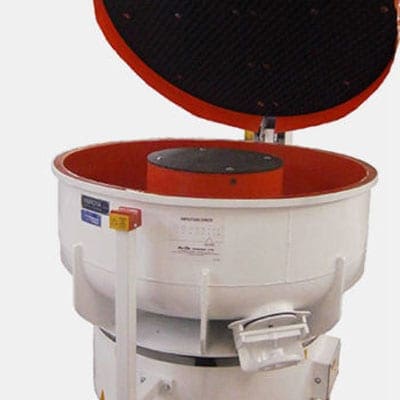
Vibratory finishing is one of the most commonly used mass finishing methods for polymer AM parts.
The gentle yet effective vibratory action allows even fragile parts to be processed safely, while achieving significant reductions in surface roughness. Although processing times range from 2 to 8 hours, vibratory systems can handle large batch volumes, making them ideal for medium to high-volume production.
Advantages:
- Gentle processing for delicate parts,
- Consistent and repeatable results,
- Cost-effective for high-volume finishing.
2. Centrifugal Disc Finishing (DT) – Faster Processing for Small and Medium Components
For smaller or medium-sized parts (up to 150 mm in length), the DT Centrifugal Disc Finishing machine provides an aggressive yet controlled action, reducing process times by over 50% compared to standard vibratory methods.
The CDF machine is not suited for fragile or heavy components, but for the right applications, it delivers a substantial increase in throughput and an exceptional surface finish.
Advantages:
- Significantly faster processing times,
- Suitable for small and thin components,
- Achieves low Ra values with consistent quality.

Case Study: Cost-Effective Vibratory Finishing Solution for SLS Parts
Client: Ricoh UK Products
Material: 3D Printed Polypropylene (Selective Laser Sintering)
Objective: Develop a vibratory finishing solution to smooth SLS parts of various shapes and sizes.
Process & Results:
ActOn Finishing developed a custom vibratory finishing process using the TU9 Vibratory Trough Machine.
- Initial Ra: 7.2 μm
- After 4 hours: 5.9 μm
- After 8 hours: 3.68 μm
The process achieved a visually smooth, contamination-free surface with no damage to thinner wall sections when operated within the recommended 4–8 hour window.
Additional recommendations included:
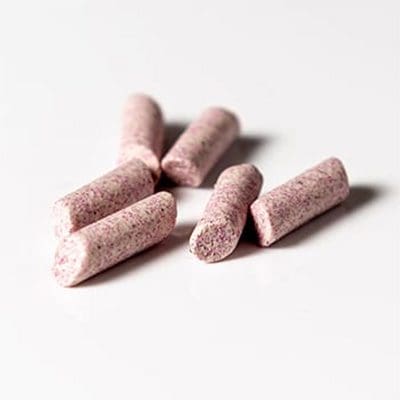
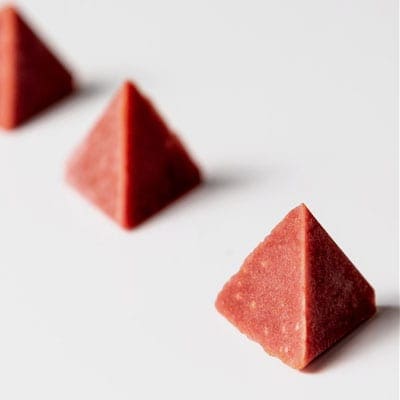
- Using mixed-size abrasive ceramic media,
- Liquid cleaning and polishing compounds, and
- Installing a divider plate to separate large and small parts during processing.
A jog button was also added for easy part retrieval. The solution offered excellent visual results and a Return on Investment (ROI) of just 34 weeks.
Summary:
- Smooth, visually appealing surface (Ra ≈ 3 μm),
- Reduced faceting and orange peel effect,
- One machine for multiple part types and sizes,
- Cost-effective, repeatable finishing process.
Finishing Process Results – Polymer 3D Printed Parts
| Process Type | Average Ra Before (μm) | Average Ra After (μm) | Average Process Time (min) |
|---|---|---|---|
| Vibratory Finishing | 6.97 | 1.16 | 480 |
| Vibratory Finishing | 13.05 | 2.46 | 480 |
| Vibratory Finishing | 13.25 | 1.33 | 480 |
| CDF Machine | 7.23 | 0.88 | 240 |
| CDF Machine | 7.56 | 1.23 | 240 |
These results demonstrate the repeatability, effectiveness, and efficiency of ActOn Finishing technologies in achieving smooth, high-quality finishes for polymer additive manufactured parts.
Complete Post-Processing Solutions for Polymer 3D Printed Parts
From depowdering and smoothing to polishing and final finishing, ActOn Finishing provides the fastest and most reliable post-processing solutions for polymer additive manufacturing.
Our technologies ensure:
- Consistent and high-quality surface finishes,
- Reduced process times and costs,
- Compatibility with complex geometries and varied materials.
Whether you’re producing prototypes or end-use components, ActOn Finishing offers the expertise, equipment, and support to help you achieve the perfect finish, every time.
Contact ActOn Finishing to discuss how our tailored post-processing technologies can enhance the quality and performance of your polymer 3D-printed parts.