







Steel shot and steel grit are two of the most widely used abrasive media types in industrial blasting. While they are often grouped together, they behave very differently in operation and produce distinct surface finishes.
Understanding the difference between steel shot blasting and steel grit blasting is essential when specifying abrasive media for surface preparation, coating adhesion, or corrosion removal.
At ActOn Finishing, we guide customers in selecting the correct abrasive media based on material type, required surface profile, recyclability, and long-term cost efficiency.
This guide explains how steel shot and steel grit differ
Where each performs best, and how to choose the right option for your blasting operation.
What Is Steel Shot?
Steel shot consists of spherical steel particles manufactured through atomisation and heat treatment processes.
Because of its rounded shape, steel shot:
- Produces a smoother surface finish.
- Peens rather than cuts the surface.
- Creates compressive stress in the substrate.
- Improves fatigue resistance.
Steel shot blasting is commonly used for:
- Surface cleaning.
- Shot peening.
- Removing light rust or scale.
- Preparing surfaces for coating.
- Strengthening metal components.
Applications include :
- Cleaning.
- Descaling.
- Derusting.
- Stripping.
- Surface Improvement.
- Smooth Finishing.
- Bright Finish / Polishing.
The rounded structure makes steel shot less aggressive than grit, but highly durable and reusable.
What Is Steel Grit?
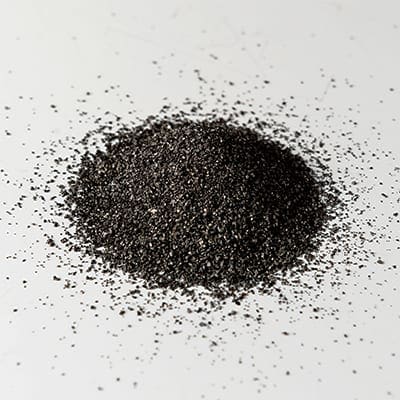
Steel grit is produced by crushing hardened steel shot into angular particles.
Unlike spherical shot, steel grit:
- Cuts into the surface.
- Creates sharper surface profiles.
- Removes heavy rust and coatings more aggressively.
- Produces higher surface roughness.
Steel grit blasting is typically used for:
- Heavy corrosion removal.
- Thick coating stripping.
- Structural steel preparation.
- Achieving high anchor profiles for coatings.
Applications include :
- Cleaning.
- Satin Finish.
- Descaling.
- Derusting.
- Stripping.
- Etching.
Because of its angular shape, grit generates a more defined surface roughness profile than shot.
Steel Shot vs Steel Grit: Key Differences
1. Shape and Surface Impact
- Steel shot is spherical and peens the surface.
- Steel grit is angular and cuts into the surface.
2. Surface Roughness Profile
- Shot produces smoother finishes with lower Ra values.
- Grit produces sharper anchor profiles suitable for heavy-duty coatings.
3. Rust and Scale Removal
Steel grit blasting is generally more effective for heavy rust removal due to its cutting action.
4. Media Recyclability
Both steel shot and steel grit are highly recyclable when used in enclosed systems.
However:
- Steel shot typically lasts longer due to its rounded structure.
- Steel grit may fracture more quickly under high-impact conditions.
Media lifespan depends heavily on system setup and pressure control.
Which Lasts Longer?
In most enclosed steel shot blasting systems, steel shot lasts longer than steel grit because it fractures less during impact.
However, in heavy rust removal environments, grit may deliver faster cleaning per cycle, offsetting shorter lifespan with higher productivity.
The correct answer depends on:
- Component material.
- Required surface finish.
- Production throughput.
- Media recovery efficiency.
Profile Measurement and Surface Roughness
Surface preparation is often defined by required surface profile rather than media type.
Surface roughness is typically measured using:
- Replica tape.
- Surface profile gauges.
- Ra or Rz measurements.
Steel grit blasting generally produces higher anchor profiles, making it suitable for thick industrial coatings.
Steel shot produces more uniform peened surfaces, which can improve fatigue resistance in mechanical components.
Matching abrasive to required profile is critical.
Media Recyclability and Cost Efficiency
Both steel shot and steel grit are significantly more recyclable than disposable abrasives such as sand or mineral grit.
In properly designed blast systems:
- Media can be reused multiple times.
- Dust extraction units remove fractured particles.
- Cyclone separators maintain grading.
Efficient recycling lowers abrasive consumption and reduces waste.
FAQs
1. What is steel shot?
Steel shot is spherical steel abrasive media used in blasting to clean or peen surfaces while producing smoother finishes.
2. What is steel grit?
Steel grit is angular crushed steel abrasive designed for aggressive cleaning and creating defined surface profiles.
3. Which lasts longer, steel shot or steel grit?
Steel shot generally lasts longer because its rounded structure fractures less during impact.
4. Which is better for rust removal?
In many applications, both steel shot and steel grit can be suitable.
5. How do I pick the right abrasive type?
Selection depends on required surface roughness, substrate material, coating specification, and system configuration.
Explore ActOn’s Media Range
At ActOn Finishing, we help customers select the optimal abrasive media for their blasting systems.
Our expertise covers:
- Steel shot blasting applications.
- Steel grit blasting operations.
- Surface roughness profile requirements.
- Media recycling efficiency.
- Process optimisation.
Explore ActOn’s full abrasive media range
Key Takeaway
Steel shot and steel grit are not interchangeable. They serve different functions in surface preparation.
Steel shot delivers smoother finishes and improved fatigue performance.
Steel grit delivers aggressive cleaning and higher anchor profiles.
Selecting the right abrasive media ensures consistent performance, efficient recycling, and reliable coating adhesion.
Call: +44 (0) 24 7646 6914
Email: sales@acton-finishing.co.uk