




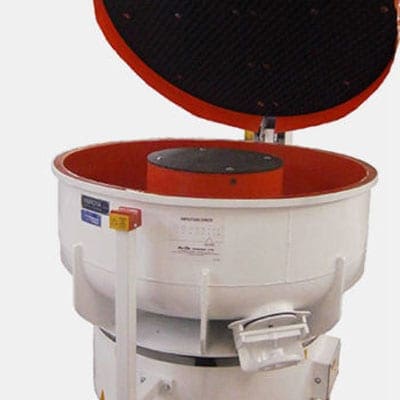


When it comes to surface preparation, blasting is one of the most effective and widely used techniques in industry. However, not all blasting processes deliver the same results.
Sand blasting and wet blasting are both forms of shot blasting, but they differ significantly in how they operate, the finishes they produce, and the applications they are best suited for.
Understanding the difference between sand blasting and wet blasting is essential when selecting the right surface cleaning equipment for your material, finish requirements, and production environment.
This guide explains how each process works, how they compare, and how to choose the right blasting method for your application.
One of the most important distinctions to make is that wheel blasting does not mean blasting vehicle wheels. In a wheel blasting machine, the term “wheel” refers to the rotating blast wheel used to accelerate and propel abrasive media. These are typically larger industrial systems designed for higher-throughput, automated or continuous processing applications.
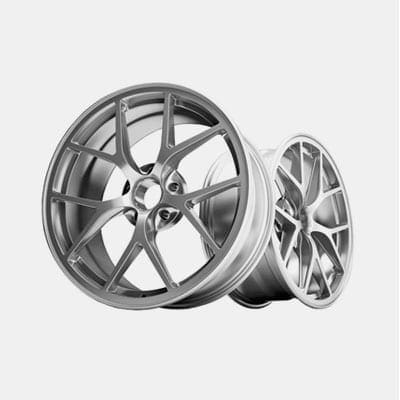
When ActOn refers specifically to equipment used for processing alloy wheels, we use the term “alloy wheel blasting”. This helps distinguish specialist alloy wheel blasting systems from industrial wheel blasting machines.
What Is Shot Blasting? (And Where Sand and Wet Blasting Fit In)
Shot blasting is a broad term that covers any process where abrasive media is propelled at a surface to clean, prepare, or improve it.
Within shot blasting, there are several process variants, including:
- Sand blasting.
- Grit blasting.
- Wheel blasting.
- Wet blasting.
- Vapour blasting.
Sand blasting and wet blasting are two distinct shot blasting processes, each with different strengths depending on surface condition, finish expectations, and environmental constraints.
Shot blasting is therefore the broader process rather than one specific machine type. Abrasive can be propelled in different ways depending on the equipment and application. Conventional shot blast systems use compressed air or water and a blast nozzle to propel abrasive media, while wheel blasting systems mechanically accelerate the abrasive using a rotating blast wheel.
What Is Wheel Blasting?
Despite its name, wheel blasting is not a process specifically for finishing wheels. The “wheel” is part of the blasting machine itself.
A wheel blasting machine uses a mechanically driven rotating blast wheel to accelerate abrasive media towards the components being processed. This differs from an air-blast cabinet, where compressed air is used to propel abrasive through a nozzle.
Wheel blasting machines are particularly relevant where manufacturers require larger-scale, high-throughput or continuous processing. Depending on the application, systems can be configured so that components are presented to the blast stream in a controlled and repeatable way as part of an industrial production process.
Wheel Blasting vs Alloy Wheel Blasting
These terms should not be confused:
- Wheel blasting – an industrial blasting process using a rotating blast wheel to propel abrasive.
- Alloy wheel blasting – blasting specifically used to process alloy wheels.
At ActOn Finishing, we use “alloy wheel blasting” when discussing equipment specifically designed for alloy wheel applications, helping distinguish these machines from larger industrial wheel blasting systems.
What Is Sand Blasting?
Sand blasting is a dry shot blasting process that uses abrasive media propelled at high velocity using compressed air or pressure systems.
While natural sand was historically used, modern sand blasting now relies on engineered abrasives to improve safety, consistency, and performance.
Key characteristics of sand blasting
- Dry blasting process.
- Uses mineral or synthetic abrasive media.
- Delivers aggressive cleaning and surface profiling.
- Effective for rust, paint, and heavy contamination removal.
Sand blasting is widely used where strong surface keying is required prior to painting or coating.
What Is Wet Blasting?
Wet blasting is also a shot blasting process, but it introduces water into the blasting stream, creating a slurry of abrasive and liquid.
This fundamentally changes how energy is transferred to the surface.
Key characteristics of wet blasting
- Abrasive mixed with water.
- Reduced dust and airborne particles.
- Smoother, more controlled surface finishes.
- Lower surface stress and heat build-up.
Wet blasting is often selected where surface appearance, dimensional control, or dust suppression is critical.
Key Differences Between Sand Blasting and Wet Blasting
1. Blasting Medium and Energy Transfer
Sand blasting relies on dry abrasive impact, which delivers high cutting energy.
Wet blasting cushions the abrasive impact with water, resulting in:
- Lower peak impact energy.
- More uniform surface treatment.
- Reduced surface damage on softer materials.
2. Surface Roughness and Finish Quality
Sand blasting typically produces:
- Higher surface roughness.
- Sharper surface profile.
- Strong coating adhesion.
Wet blasting typically produces:
- Smoother, satin-like finishes.
- Minimal abrasive embedding.
- Improved cosmetic appearance.
This makes wet blasting preferable for precision components and visible surfaces.
3. Dust, Safety and Environmental Control
Sand blasting generates:
- High dust levels, hence a dust extractor is a must, to collect the dust.
- Increased airborne contamination.
- Greater extraction and PPE requirements.
Wet blasting significantly reduces:
- Dust emissions.
- Static build-up.
- Operator exposure.
As a result, wet blasting is often chosen where health, safety, and environmental control are priorities.
4. Automation and Production Integration
Both sand blasting and wet blasting:
- Can be fully automated.
- Can be integrated into production lines.
- Can be enclosed in cabinet or conveyor systems.
However, wet blasting systems are often favoured for repeatable, cosmetic finishing, while sand blasting is commonly used for structural and industrial preparation.
5. Media Life and Operating Cost
Sand blasting media:
- Delivers strong cutting action.
- May break down faster depending on abrasive type.
Wet blasting media:
- Experiences reduced fracture due to water cushioning.
- Often lasts longer per cycle.
Overall operating cost depends on:
- Media selection.
- Reclamation efficiency.
- Cycle time requirements.
From Manual Shot Blasting to Automated and Wheel Blasting Systems
The choice between shot blasting equipment is not simply a question of manual versus wheel blasting. Manufacturers can move through different levels of equipment and automation depending on their component, production volume and process requirements.
1. Manual Shot Blasting Cabinets
Manual shot blasting cabinets provide operator-controlled blasting and can be particularly useful where flexibility is important. The operator directs the blast stream towards the component, allowing different parts and surface areas to be processed as required.
This type of equipment can be appropriate where production requirements vary or where operator control is an important part of the process.
2. Automated Shot Blasting Systems
Where components are processed repeatedly or at higher production volumes, automation can provide greater process control and repeatability.
Automated shot blasting equipment can control every aspect of a shot blasting process and can be easily integrated in a production line, helping to deliver consistent coverage across repeated production cycles.
Moving to automation does not automatically mean moving to wheel blasting. Automated systems can still use compressed-air or wet blast technology where that process is better suited to the component and required result.
3. Wheel Blasting Machines
For larger-scale industrial applications, manufacturers may require a wheel blasting machine. These systems use one or more rotating blast wheels to mechanically accelerate the abrasive media.
Wheel blasting becomes particularly relevant where production requirements include larger components, higher throughput or continuous processing.
The progression can therefore be viewed as manual cabinet → automated blasting system → large industrial wheel blasting system, although the correct solution should always be determined by the application rather than production volume alone.
Shot Blasting Cabinet, Automated System or Wheel Blasting Machine?
Different production requirements can point towards different blasting solutions:
| Requirement | System to consider |
|---|---|
| Flexible processing of different components | Manual shot blasting cabinet |
| Operator-controlled blasting | Manual shot blasting cabinet |
| Repeat processing and controlled blast coverage | Automated shot blasting system |
| Higher-volume automated processing | Automated shot blasting system |
| Large-scale industrial processing | Wheel blasting machine |
| Continuous production requirements | Wheel blasting system |
| Blasting specifically designed for alloy wheels | Alloy wheel blasting system |
This distinction is important because a wheel blasting machine is not simply a larger version of a blasting cabinet. The systems use different methods to accelerate and deliver abrasive media and are selected around different manufacturing requirements.
Which Process Is More Efficient?
Efficiency depends on what you are trying to achieve.
Sand blasting is more efficient for:
- Heavy corrosion removal.
- Thick coating stripping.
- Structural steel preparation.
Wet blasting is more efficient for:
- Cosmetic finishing.
- Precision cleaning.
- Reduced rework and surface damage.
Choosing the right process prevents over-processing and unnecessary cost.
Applications Across Industries
1. Sand Blasting Applications
- Structural steel.
- Fabrications and weldments.
- Heavy equipment refurbishment.
- Pre-paint surface preparation.
2. Wet Blasting Applications
- Aerospace components.
- Aluminium and light alloys.
- Medical and pharmaceutical equipment.
- Tooling and mould cleaning.
Both processes are critical within modern abrasive blasting UK manufacturing environments.
How to Choose the Right Blasting Process
When selecting between sand blasting and wet blasting, consider:
- Material type.
- Required surface roughness.
- Cosmetic requirements.
- Health and safety constraints.
- Production volume.
- Downstream coating or inspection needs.
A process trial is often the most reliable way to validate the correct method.
When deciding between a manual cabinet, automated shot blasting equipment and a wheel blasting machine, consider:
- Component dimensions and weight.
- Component material.
- Starting surface condition.
- Required final surface condition.
- Production volume.
- Required cycle time.
- Abrasive media.
- Level of automation required.
- How components need to enter and leave the blasting process.
- Whether integration with other production equipment is required.
- The budget available.
The correct machine should therefore be selected around the component, required result and manufacturing process rather than simply choosing the largest or most automated system available.
What Is the Difference Between Shot Blasting and Wheel Blasting?
Shot blasting is the broader process of propelling abrasive media against a surface for cleaning, preparation or surface treatment. Wheel blasting is a specific type of shot blasting in which a rotating blast wheel mechanically accelerates the abrasive. Wheel blasting machines are typically designed for larger-scale, higher-throughput or continuous industrial processing. The term “wheel blasting” refers to the blast wheel inside the machine – it does not mean blasting vehicle wheels.
FAQs
1. Is wheel blasting the same as shot blasting?
Wheel blasting is a type of shot blasting. Shot blasting is the broader family of abrasive blasting processes, while wheel blasting specifically uses a rotating blast wheel to mechanically accelerate the abrasive media.
2. Does wheel blasting mean blasting vehicle wheels?
No. The term “wheel blasting” refers to the rotating blast wheel used to propel abrasive media. When ActOn discusses blasting specifically for alloy wheels, we use the term “alloy wheel blasting”.
3. What is the difference between an air-blast machine and a wheel blasting machine?
An air-blast machine uses compressed air to accelerate abrasive through a nozzle. A wheel blasting machine uses a mechanically driven rotating blast wheel to accelerate and project the abrasive.
4. When should I choose an automated shot blasting system?
Automated shot blasting can be suitable where components are processed repeatedly and controlled, consistent blast coverage is required. The correct level of automation depends on component geometry, production volume and the required surface condition.
5. When should I choose a wheel blasting machine?
Wheel blasting machines are particularly relevant to larger-scale industrial applications requiring high throughput, larger component processing or continuous production. ActOn can assess your components and production requirements to determine the appropriate blasting system.
Compare Blasting Methods with Our Experts
ActOn Finishing supplies a full range of shot blasting machines, including sand blasting systems, wet blasting cabinets, and automated surface preparation solutions.
Our engineers help customers compare processes, validate finishes, and select the most efficient abrasive blasting process for their application.
Compare blasting methods with our experts
Call: +44 (0) 24 7646 6914
Email: sales@acton-finishing.co.uk