-

-
- About
- Industries
-
Sub-Contracting
-
- Consumables
-
Cleaning
-
-
Blasting & Peening
-
- All Shot Blasting Machines
- Dry Shot Blasting Cabinets
- ActOn Mobile Shot Blasting Room
- ECO Shot Blasting Machines
- Premium DI Suction Blasting Machines
- Premium DP Pressure Blasting Cabinets
- AM Shot Peening and Blasting Series
- NF Sandblasting Cabinets
- Alloy Wheel Sand Blaster Machine
- Automated Shot Blasting Equipment
- Wet Shot Blasting Cabinets
- AWB Wet Blasting Cabinet
- Premium NP Wet Blasting Cabinets
- Automated Wet Blasting Machine
- ET 800 Wet Blasting System
- ET 100 RB Wet Shot Blasting System
- ET 6600 Turntable Wet Blasting System
- ET 6650 Overhead Conveyor Wet Blasting System
- ET 1 K Satellite Wet Blasting System
- ET 4 K Satellite Wet Shot Blasting System
- All Wheel Shot Blasting Machines
- Spinner Hanger Blast Machine
- Tumble Rubber Belt Shot Blasting Machine
- Tumble Steel Belt Shot Blasting Machine
- Wire Mesh Belt Shot Blasting Machine
- Continuous Feed Overhead Rail Blasting Machine
- Roller Conveyor Blast Machine
- Continuous Feed Tube Blast Cleaning Machine
- Rotary Table Shot Blasting Machine
- Tunnel Concrete Shot Blast Machine
-
-
Surface Finishing
-
- All Mass Finishing Machines
- Vibratory Bowl Machines
- Vibratory Trough Machines
- Dual Finishing Machines
- Dryers
- Centrifugal High Energy Machines
- Disc Finishing Machines
- ADF Drag Finishing Machine
- LE30 Rotary Barrel Machine
- Wheel Polishing Machine
- GrindPro Grinding Booth
- Automation for Mass Finishing
- Mass Finishing Accessories
-





ActOn Case Studies
Post-Processing 3D Printed Stainless Steel Pen Parts to an Ra Below 0.5µm
3D printing opens new possibilities for custom, complex designs, but achieving a premium, polished finish often requires advanced post-processing. This case study showcases how ActOn Finishing helped a client transform 3D printed stainless steel pen parts from a rough Ra 4.87µm to a polished Ra 0.12µm, providing a repeatable, production-ready finishing solution.
Project Background
Our client delivers customised manufacturing solutions (including 3d printing) tailored to meet the specific needs of each of their customers. They have approached ActOn with the requirement to provide a post-processing solution for 3D printed pen parts, manufactured by them:
- Remove printing-related surface roughness and imperfections
- Deburr and smooth complex geometries
- Achieve a polished, defect-free finish with Ra under 0.5µm
- Maintain efficient cycle times for production scalability
Finishing Process
We designed a three-stage post-processing workflow using our CHE50 High Energy Machine, ensuring consistent, high-quality results:
Stage 1: Deburring & Initial Surface Finishing
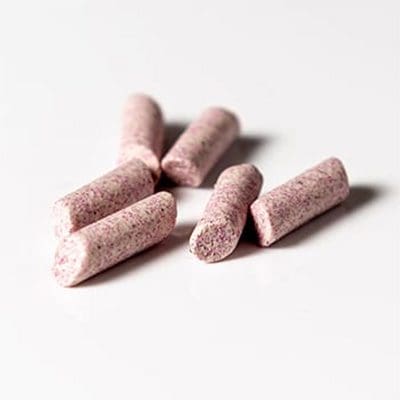
- Used aggressive ceramic media with a concentrated liquid compound featuring cleaning and polishing properties.
- Objective: remove burrs and reduce roughness left by the 3D printing process.
Stage 2: Smoothing & Surface Preparation
- Transitioned to medium-abrasive plastic media with the same liquid compound.
- Objective: smooth the surface and eliminate micro-defects, preparing parts for the final polish.
Stage 3: High-Quality Polishing
- Finished with pretreated Maizorb media in the CHE50 machine.
- Objective: achieve a flawless, mirror-like finish with a final Ra of 0.12µm.
The Post-Processing Solution
The solution implemented included:
-
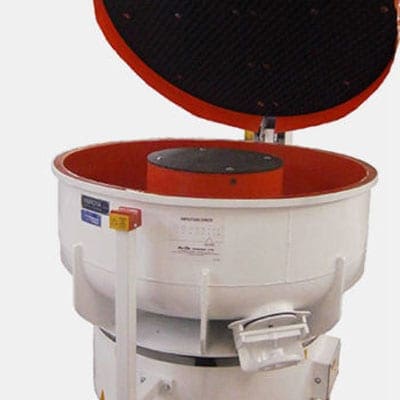
CHE50 High Energy Machine: for rapid, uniform finishing of complex 3D printed parts
-
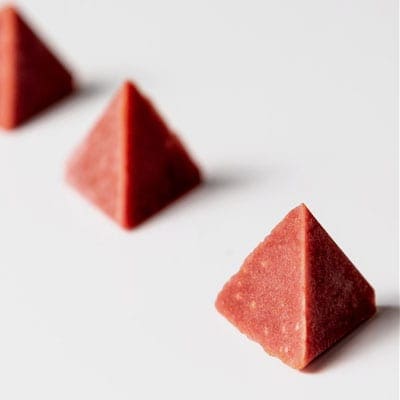
Aggressive Ceramic Media: for heavy deburring and initial smoothing
-
Medium-Abrasive Plastic Media: for intermediate surface refinement
-
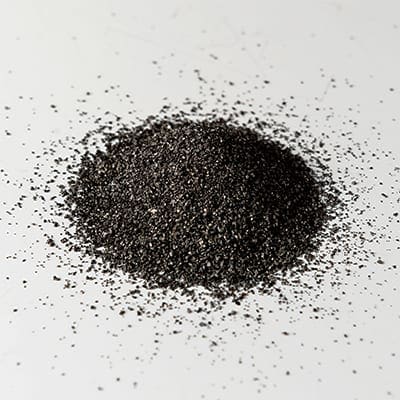
Pretreated Maizorb Media: for high-quality polishing
-
Concentrated Liquid Compound: to clean and enhance the finish at every stage
This surface finishing solution was built with industrial-grade reliability in mind, delivering a long-term solution with minimal downtime, on a wide range of 3d printed components.
Results
The CHE50 system delivered immediate benefits to the production process:
- Surface Roughness: reduced from Ra 4.87µm to Ra 0.12µm
- Time Efficiency: full process completed in 3.5 hours
- Premium Finish: smooth, defect-free surfaces ideal for high-end pen production
- Scalability: consistent, repeatable results suitable for ongoing 3d printed production batches
Before / After