









Medical Implant Finishing for Critical Surface Requirements
Medical implants are manufactured to exceptionally demanding standards. Whether producing orthopaedic implants, trauma devices, spinal implants or surgical instruments, manufacturers must achieve precise and repeatable surface finishes while maintaining dimensional accuracy and component integrity.
Unlike general engineering, medical manufacturing requires finishing processes that support:
- Controlled surface roughness.
- Repeatable Ra values.
- Burr-free components.
- Clean, contamination-free surfaces.
- Process validation.
- Batch consistency.
At ActOn Finishing, medical component finishing is approached as a complete manufacturing process rather than a single polishing operation.
Depending on the implant, this may include:
- CHE (Centrifugal High Energy) Finishing.
- Drag Finishing.
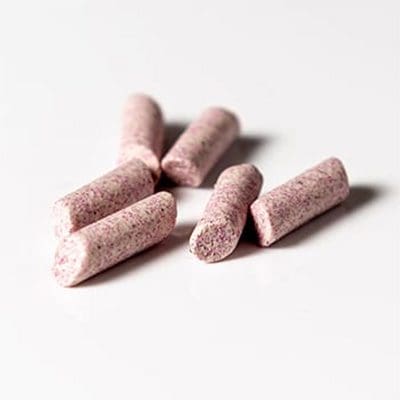
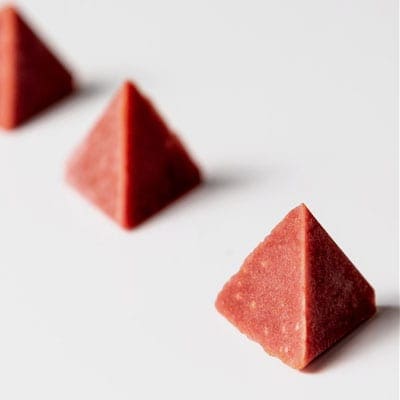
- Medical-approved finishing media.
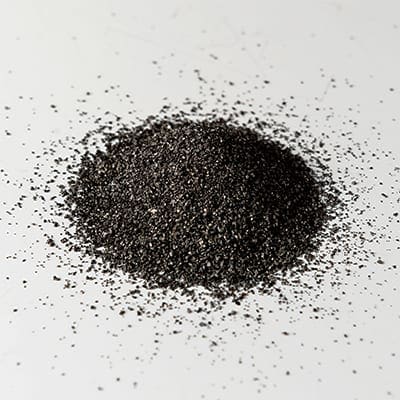
- Medical-approved process compounds.
- Process validation.
- Dry Electropolishing Technology.
By selecting the correct finishing route, manufacturers can improve both surface quality and production efficiency while supporting the stringent requirements of medical device manufacturing.
Why Surface Finish Matters for Medical Devices
The surface finish of a medical implant influences more than appearance.
It can affect:
- Cleaning effectiveness.
- Surface cleanliness.
- Wear characteristics.
- Corrosion resistance.
- Implant performance.
- Manufacturing consistency.
For this reason, implant manufacturers often specify surface roughness targets rather than simply requesting a polished appearance.
Achieving those targets consistently requires carefully controlled finishing processes rather than manual polishing alone.
Achieving Consistent Ra Values
Surface roughness is commonly expressed as an Ra value, providing a measurable indication of surface texture.
The required Ra value varies according to:
- Implant type.
- Material.
- Manufacturing process.
- Clinical application.
- Customer specification.
Rather than targeting one universal Ra figure, ActOn develops finishing processes capable of consistently achieving the required specification for each application.
ActOn can provide the right surface finishing technology that not only achieves repeatable results, but also Ra under 0,05 micrometres.
Why CHE Finishing Is Widely Used for Medical Components
For many medical applications, Centrifugal High Energy (CHE) finishing provides significant advantages over conventional finishing methods.
CHE systems generate considerably higher media energy than standard vibratory machines, enabling controlled surface refinement while reducing processing time.
Benefits include:
- Faster cycle times.
- Uniform surface refinement.
- Controlled edge radiusing.
- Excellent batch consistency.
- Reduced manual finishing.
CHE technology helps you eliminate unnecessary finishing steps, that you would normally carry out in traditional medical implant finishing. For example at ActOn we can reduce the finishing steps for a knee implants from 7 steps to just to just 3; Grinding, Smoothing and Polishing. Moreover, our innovative process uses 70% less water than traditional methods, contributing to a more sustainable approach to medical implant production.
Drag Finishing for High-Value Medical Implants
Some implants cannot be processed in bulk without risking component contact or inconsistent finishing.
For these applications, Drag Finishing provides individual control of every component.
Each implant is securely mounted before being guided through the finishing media under carefully controlled conditions.
This approach offers:
- Excellent surface consistency.
- Reduced risk of component damage.
- Precise edge treatment.
- Highly repeatable polishing.
- Controlled finishing of complex geometries.
Medical-Approved Finishing Media and Compounds
The finishing machine is only one part of the process.
Media and compounds also play a critical role in achieving the required finish.
ActOn supplies medical-approved finishing media and process compounds developed for medical manufacturing applications.
Correct consumable selection influences:
- Surface roughness.
- Surface cleanliness.
- Material removal.
- Process stability.
- Component appearance.
Different implant materials require different media formulations and process chemistry to achieve the desired finish without introducing unnecessary variation.
Knee Implant Finishing
Traditional femoral implant finishing typically requires a seven-stage process that includes deburring, descaling, surface smoothing, and final polishing. By combining the CHEF Machine with DLyte technology,
ActOn streamlines this workflow into just three stages:
Stage 1 – Grinding
Removes the majority of milling and machining marks from the implant surface.
Stage 2 – Smoothing
Blends the surface and produces a uniform, smooth finish in preparation for polishing.
Stage 3 – Polishing
Uses the DLyte machine to achieve a mirror-quality surface finish.
The CHEF Machine processes up to 12 parts per batch, while the DLyte system accommodates 24 parts per batch. The process consistently achieves a final surface roughness average (Ra) of 0.04 μm, significantly outperforming the target specification of 0.07 μm, starting from an initial Ra of 3.133 μm.
Why Medical Manufacturers Choose ActOn
ActOn supports medical manufacturers through:
- CHE finishing systems.
- Drag Finishing technology.
- Medical-approved media.
- Medical-approved compounds.
- Dry electropolishing technology.
- Process development.
- Finishing trials.
- Technical support.
Rather than supplying individual machines, ActOn helps manufacturers develop complete finishing processes tailored to their components and quality requirements.
FAQs
1. What Ra value is required for medical implants?
The required Ra value depends on the implant type, material and customer specification. Finishing processes should be developed to achieve the required surface consistently rather than aiming for a universal value.
2. Why is CHE finishing used for medical components?
CHE finishing provides high-energy surface refinement, excellent repeatability and reduced processing times, making it ideal for precision medical manufacturing.
3. When should Drag Finishing be used?
Drag Finishing is recommended for complex or high-value implants requiring individually controlled finishing without component-to-component contact.
4. Why are specialist finishing media and compounds important?
Medical-approved consumables help maintain consistent surface quality, improve process repeatability and support validated finishing processes for medical device manufacturing.
Speak to a Medical Finishing Specialist
Whether you are developing a new implant or improving an existing finishing process, ActOn can help identify the most appropriate combination of finishing technology, media and compounds.
Arrange a finishing trial with our engineering team to evaluate the most suitable process for your medical components.
Call: +44 (0) 24 7646 6914
Email: sales@acton-finishing.co.uk