






Manufacturing aerospace components is unlike manufacturing for almost any other industry. Every component must meet demanding performance, quality and traceability requirements, while maintaining extremely tight dimensional tolerances and surface integrity.
Whether producing new components for OEMs or maintaining critical parts within the aerospace MRO sector, the finishing process plays a vital role in component performance, fatigue life and manufacturing consistency.
Surface finishing is no longer simply about improving appearance. Today’s aerospace manufacturers require validated finishing processes capable of delivering repeatable results across complex geometries while supporting stringent quality management systems.
At ActOn Finishing, we work with aerospace manufacturers to develop engineered finishing processes using technologies including:
- Vibratory Finishing.
- Centrifugal High Energy (CHE) Finishing.
- Drag Finishing.
- DLyte Dry Electropolishing.
- Shot Blasting.
- Ultrasonic Cleaning.
- Precision Polishing.
Rather than recommending a single machine, we help manufacturers build complete finishing processes based on component geometry, material, production volume and required surface finish.
Why Aerospace Finishing Is Different
The aerospace industry places exceptional demands on every manufactured component.
Unlike general engineering, aerospace parts frequently operate under:
- High cyclic loading.
- Extreme temperatures.
- Corrosive environments.
- Tight fatigue-life requirements.
- Strict inspection regimes.
Even relatively small changes in surface condition can influence:
- Fatigue performance.
- Friction characteristics.
- Corrosion resistance.
- Coating adhesion.
- Aerodynamic performance.
- Assembly consistency.
For this reason, surface finishing must become an engineered manufacturing process rather than a secondary production operation.
Components That Benefit from Precision Aerospace Finishing
ActOn supports manufacturers working with a wide range of aerospace components throughout both OEM production and maintenance programmes.
Typical applications include:
1. Jet Engine Components
Engine components require consistent finishing to improve surface quality while maintaining dimensional accuracy.
Examples include:
- Turbine blades.
- Compressor blades.
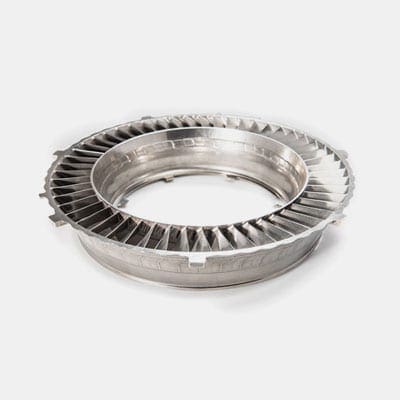
- Blisks.
- Vanes.
- Engine casings.
- Compressor discs.
- Engine housings.
Many of these components contain complex geometries that require carefully controlled finishing processes to avoid damaging critical features.
2. Landing Gear Components
Landing gear assemblies contain precision-machined components that require controlled deburring, cleaning and polishing before assembly or inspection.
Typical examples include:
- Structural brackets.
- Precision machined parts.
- Hydraulic components.
- Pins and fittings.
Surface consistency is essential to support inspection and long-term operational reliability.
3. Airframe and Structural Components
Structural aerospace parts often require surface preparation before coating or assembly.
Depending on the application, this may involve:
- Deburring.
- Surface refinement.
- Cleaning.
- Shot blasting.
- Precision polishing.
Each process must be selected according to the material specification and required surface finish.
4. Fasteners and Precision Components
Smaller aerospace parts can benefit from high-energy finishing systems capable of processing large batches while maintaining excellent consistency.
These include:
- Fasteners.
- Bushes.
- Sleeves.
- Precision turned parts.
- Specialised aerospace hardware.
Selecting the correct finishing technology helps reduce manual processing while improving repeatability.
Validated Finishing Processes for Aerospace Manufacturing
One of the key differences between aerospace finishing and general industrial finishing is the emphasis on validation and repeatability.
Manufacturers require confidence that each production batch is processed using stable and repeatable parameters.
This includes control of:
- Process time.
- Media selection.
- Compound chemistry.
- Surface roughness.
- Component handling.
- Cleaning stages.
- Inspection procedures.
By validating each stage of the process, manufacturers can improve production consistency while supporting internal quality requirements.
Surface Roughness and Component Performance
Surface roughness is often measured using Ra values, but achieving a target figure is only one part of the process.
The objective is to produce a surface that supports the component’s intended function.
Depending on the application, finishing may be used to:
- Reduce machining marks.
- Improve fatigue performance.
- Prepare surfaces for coating.
- Improve cleanability.
- Enhance aerodynamic efficiency.
- Produce consistent cosmetic finishes.
The appropriate finishing process depends on the component material, geometry and performance requirements rather than targeting a single surface roughness value.
Selecting the Correct Finishing Technology
No single finishing process is suitable for every aerospace component.
The correct solution depends on several factors, including:
- Material type.
- Component complexity.
- Required surface finish.
- Production volume.
- Functional requirements.
- Inspection criteria.
This is why ActOn offers multiple finishing technologies rather than promoting a one-size-fits-all approach.
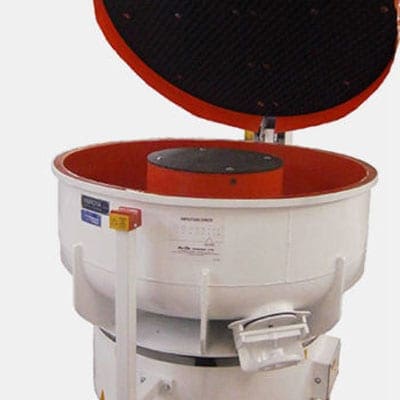
Vibratory Finishing for High-Volume Components
Vibratory finishing remains one of the most versatile finishing processes used throughout aerospace manufacturing.
Components are processed within carefully selected media and compounds, allowing burr removal, edge refinement and surface improvement to take place simultaneously across an entire batch.
Typical aerospace applications include:
- Precision machined components.
- Fasteners.
- Brackets.
- Housings.
- Aluminium components.
- Stainless steel parts.
- Titanium components.
Benefits include:
- Consistent deburring.
- Uniform edge radiusing.
- Improved cosmetic finish.
- Reduced manual finishing.
- Excellent batch repeatability.
Because thousands of components can often be processed together, vibratory finishing provides excellent productivity without sacrificing consistency.
Centrifugal High Energy (CHE) Finishing
Some aerospace components require significantly faster material removal or more aggressive surface refinement than conventional vibratory systems can provide.
For these applications, ActOn supplies Centrifugal High Energy (CHE) finishing systems.
CHE machines generate considerably higher media energy, making them suitable where manufacturers need:
- Faster cycle times.
- Greater cutting action.
- Controlled edge radiusing.
- Surface smoothing.
- Improved productivity.
CHE finishing is frequently selected for precision-engineered aerospace components where both throughput and consistency are important.
Compared with conventional vibratory finishing, CHE systems can often achieve the required finish in substantially shorter processing times.
Drag Finishing for High-Value Components
Some aerospace parts cannot simply be processed in bulk.
Complex and high-value components often require individually controlled finishing to ensure every surface receives consistent treatment.
This is where Drag Finishing becomes particularly valuable.
Rather than allowing parts to move freely within the media, components are securely clamped and guided through the finishing media under controlled conditions.
This offers several advantages:
- Precise process control.
- Excellent repeatability.
- Reduced risk of part-to-part contact.
- Superior surface consistency.
- Controlled edge treatment.
Drag finishing is particularly suitable for:
- Turbine blades.
- Blisks.
- Compressor components.
- Precision tooling.
- Complex aerospace geometries.
The ability to control every stage of the process makes drag finishing ideal for components where quality requirements are exceptionally demanding.
DLyte Dry Electropolishing
Mechanical finishing is not always the most suitable solution.
For conductive metallic components requiring exceptionally fine surface finishes, DLyte Dry Electropolishing provides an alternative process based on electrochemical technology.
Unlike conventional electropolishing, DLyte uses a dry media process to produce highly controlled surface refinement.
Benefits include:
- Surface smoothing.
- Improved cleanability.
- Enhanced cosmetic appearance.
- Better corrosion performance.
- Consistent finishing of complex geometries.
DLyte is particularly effective for intricate components where conventional polishing methods struggle to access difficult areas.
For many aerospace manufacturers, DLyte is used as the final finishing stage following previous deburring or surface preparation processes.
Shot Blasting for Surface Preparation
Shot blasting continues to play an essential role within aerospace manufacturing.
Depending on the application, blasting may be used to:
- Prepare surfaces before coating.
- Remove oxidation.
- Clean machined components.
- Produce consistent surface conditions.
- Prepare parts for inspection.
Selecting the correct blasting media and process parameters is essential to ensure the required surface profile is achieved without compromising component integrity.
ActOn’s range of shot blasting equipment enables manufacturers to match the blasting process to both the component geometry and production requirements.
Building the Right Process Sequence
One of the biggest misconceptions in aerospace finishing is that one machine performs every task.
In reality, manufacturers often combine multiple finishing technologies to achieve the required result.
A typical process route might include:
- Initial deburring.
- Surface refinement.
- Precision polishing.
- Inspection.
- Final validation.
The exact sequence depends on the component, material and specification.
By combining complementary technologies rather than relying on a single process, manufacturers can achieve greater consistency while reducing rework and improving productivity.
A Complete Aerospace Finishing Portfolio
One of ActOn’s strengths is the breadth of finishing technologies available.
Instead of trying to adapt a single machine to every application, manufacturers can select the most appropriate technology for each process stage.
Available technologies include:
- Vibratory Finishing.
- Centrifugal High Energy (CHE) Finishing.
- Drag Finishing.
- DLyte Dry Electropolishing.
- Shot Blasting.
- Ultrasonic Cleaning.
- Automated Ultrasonic Cleaning Systems.
- Mass Finishing Media.
- Process Compounds.
This enables complete finishing solutions to be developed around individual aerospace applications.
Process Selection Matrix
| Manufacturing Requirement | Recommended ActOn Process |
|---|---|
| General deburring | Vibratory Finishing |
| Smooth finishing and mirror polishing | CHE Finishing |
| Precision finishing of complex components | Drag Finishing |
| Fine polishing | DLyte Dry Electropolishing |
| Surface preparation before coating | Shot Blasting |
| Radiusing and defect removal | Precision Polishing |
Selecting the correct sequence of processes often produces significantly better results than relying on a single finishing operation.
Why Aerospace Manufacturers Choose ActOn Finishing
Manufacturers choose ActOn because the focus extends beyond supplying machinery.
The team works with customers to develop finishing processes based on engineering objectives, production requirements and component performance.
ActOn supports customers with:
- Process development.
- Equipment selection.
- Finishing trials.
- Technical consultation.
- Process optimisation.
- Installation and commissioning.
- Operator training.
- Ongoing technical support.
This collaborative approach helps manufacturers introduce finishing processes with greater confidence while reducing the risk of costly production issues
FAQs
1. What finishing standards apply in aerospace manufacturing?
Finishing requirements vary depending on the component and application. Manufacturers typically require repeatable processes, controlled surface finishes and documented quality procedures that support their internal and customer specifications.
2. How are turbine components finished?
The finishing route depends on the component and material. Processes may include vibratory or centrifugal high energy finishing and precision polishing to achieve the required surface condition.
3. What surface roughness values can be achieved?
Achievable surface roughness depends on the material, geometry and finishing technology selected. Process trials help determine the most suitable route for achieving the required specification, but we can achieve values under 0.05 micrometers.
4. Can aerospace finishing processes be validated?
Yes. Finishing processes can be developed using controlled parameters to improve repeatability and support production quality requirements.
Request an Aerospace Finishing Consultation
Whether you are manufacturing new aerospace components or supporting an MRO programme, selecting the correct finishing process can improve consistency, productivity and component quality.
ActOn Finishing offers technical consultations and process trials to help identify the most appropriate finishing technology for your application.
Arrange an aerospace finishing consultation today to discuss your component requirements with our technical team.
Call: +44 (0) 24 7646 6914
Email: sales@acton-finishing.co.uk