


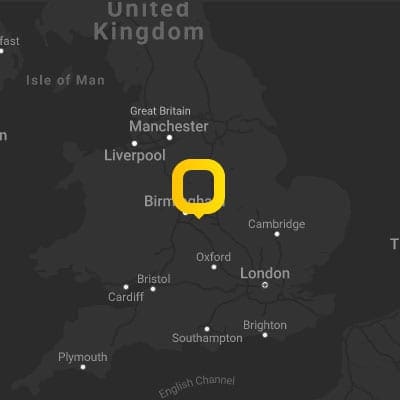



17–20 November 2026 | Frankfurt, Germany | Stand F26
ActOn Finishing is exhibiting at Formnext 2026 in Frankfurt, where we will showcase our solutions for the post-processing and surface finishing of additive manufactured components.
From removing residual powder and support structures to reducing surface roughness, smoothing and achieving highly polished finishes, post-processing is a critical stage in producing functional, production-ready 3D printed components.
At Stand F26, visitors will be able to meet our surface finishing specialists, discuss their own AM components and see examples of 3D printed parts finished using ActOn technologies.
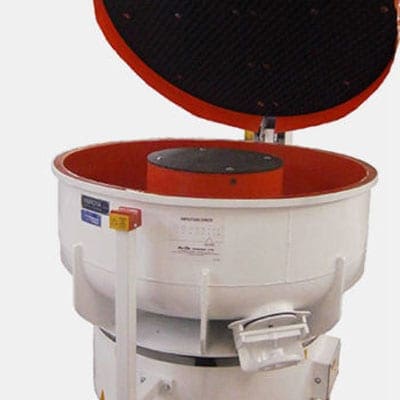
We will also be showcasing our CPM10 Centrifugal High Energy Finishing Machine, a compact high-energy system used for demanding applications including surface roughness reduction, defect removal and polishing of additive manufactured parts.
Why is surface finishing important for additive manufactured parts?
Additive manufacturing enables manufacturers to produce complex geometries that can be difficult or impossible to manufacture using conventional methods. However, the component that comes out of the printer does not necessarily have its required final surface.
Depending on the additive manufacturing process, material, build orientation and component geometry, post-processing may be required to remove powder or support structures, reduce roughness and achieve the required surface finish.
ActOn’s experience shows that metal and polymer AM parts can typically have an average surface roughness (Ra) of approximately 10–30 μm, with values varying according to geometry and support locations. Selecting the appropriate post-processing technology is therefore an important part of achieving the required component characteristics.
The challenge is that there is no single finishing process suitable for every 3D printed component. Material, geometry, initial surface condition, accessibility, production volume and the required final finish all influence the process.
This is why ActOn focuses not simply on supplying a machine, but on developing the right finishing process for the component.
See the CPM10 Centrifugal High Energy Finishing Machine at Formnext 2026
One of the highlights on ActOn Stand F26 will be our CPM10 Centrifugal High Energy Finishing Machine.
Centrifugal High Energy (CHE) finishing automates the mechanical and chemical finishing of components. The process uses the high force and speed at which finishing media interacts with the component surface. Depending on rotational speed and machine configuration, the forces generated can reach approximately 15–20 times the force of gravity.
This makes the technology particularly suited to applications requiring high levels of surface improvement or significant defect removal, where conventional vibratory finishing may not achieve the required result.
For additive manufactured components, Centrifugal High Energy finishing can be used for applications such as:
- reducing surface roughness;
- removing manufacturing defects;
- deburring;
- smoothing rough AM surfaces;
- preparing surfaces for subsequent finishing stages;
- polishing and achieving highly reflective finishes.
The process also provides manufacturers with greater control and repeatability compared with labour-intensive manual finishing. Key benefits of ActOn’s CHE technology include fast processing times, high polishing efficiency, controllable stock removal, programmable processes and no requirement for component fixturing or tooling.
Proven CPM10 results on additive manufactured components
The CPM10 has already been used in AM process development work with The Manufacturing Technology Centre (MTC) on SLM and EBM components, including Ti6Al4V parts.
Trials were undertaken to establish suitable machine parameters and finishing processes for rough additive manufactured surfaces and support-structure-related finishing requirements. The project achieved:
- Ra below 1 μm in 5 hours;
- 80% faster processing than traditional finishing in the reported application;
- Ra of approximately 2–3 μm in around 30 minutes;
- 46% cost savings on the finishing process.
The project demonstrated applications ranging from surface roughness reduction to deburring and polishing.
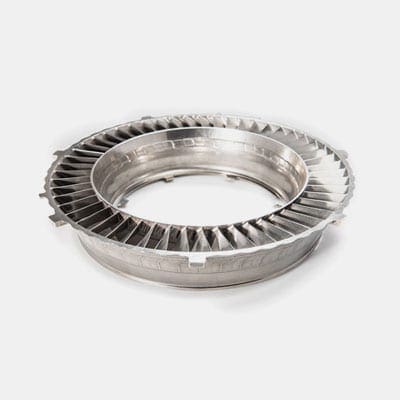
At Formnext, you will be able to see the CPM10 itself alongside examples of finished 3D printed components, giving you the opportunity to examine the type of surface transformation that can be achieved.
From powder removal to the final polished surface
ActOn provides a range of post-processing solutions for additive manufacturing, allowing the finishing route to be developed around the individual component rather than forcing every part through the same technology.
Powder removal and AM blasting
For powder-bed metal additive manufacturing, one of the first post-processing stages is often the removal of residual powder.
ActOn’s AM blasting technology is designed to remove powder from 3D printed components, including parts with more complex geometries. The AM DI range can also incorporate features such as cyclone separation, ionisation and HEPA filtration depending on the application and machine specification. Metal Additive Manufacturing Br…
Support and structure removal
Support structures and manufacturing defects can leave areas that require substantial material removal before the component reaches its required surface condition. The correct finishing technology and consumable combination can be developed to provide the necessary cutting action while controlling the effect on the component.
This is particularly important with AM parts, where the objective is not simply to make a surface look better. The process must be developed around the geometry, material, initial roughness and required final specification.
Surface smoothing and roughness reduction
Once the initial manufacturing residues and larger defects have been addressed, mass finishing technologies can be used to progressively reduce surface roughness and produce a more uniform finish.
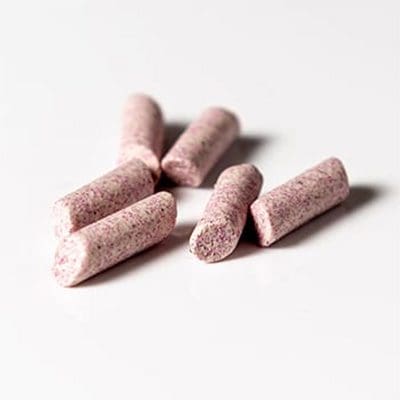
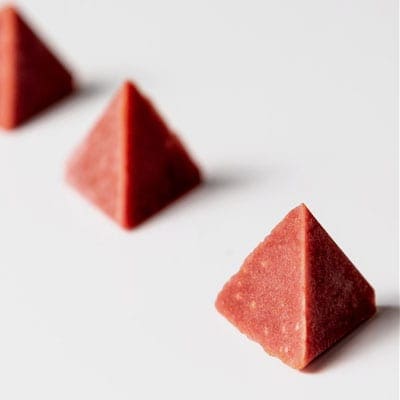
ActOn offers different technologies depending on the component, including Centrifugal High Energy, centrifugal disc, vibratory and other specialised finishing processes.
Our AM finishing work has demonstrated significant changes in surface roughness. Examples documented by ActOn include reductions from Ra 21.02 μm to 3.03 μm and from Ra 16 μm to 0.18 μm, illustrating why the finishing process needs to be selected according to the required result.
Polishing and bright finishing
Where the application requires a high-quality aesthetic or functional surface, the finishing process can be developed beyond smoothing into polishing. This may involve several stages with different media and compounds, progressively moving from cutting and smoothing to polishing.
For example, ActOn has developed a three-stage process for a stainless-steel 3D printed component using grinding, smoothing and polishing stages. The process produced a bright polished finish while maintaining the dimensional integrity of the component.
How do you choose the right finishing process for a 3D printed component?
The answer depends on the part.
Two components manufactured using the same additive technology may still require different finishing processes because of differences in their material, size, geometry, surface condition and final specification. This is why process development is an important part of the service we provide.
Rather than recommending a machine before understanding the application, our team can evaluate the component and determine:
Initial condition → required result → suitable technology → media and compound → process parameters → validation
The objective is to develop a process that can deliver the required finish consistently and repeatably within the wider manufacturing process.
Bring your AM finishing challenge to Stand F26
If you are visiting Formnext with a specific component or post-processing problem, come and talk to our team. Tell us what you are manufacturing, how the component is currently produced, the challenges you are experiencing and the surface finish you need to achieve.
Our specialists can discuss potential finishing routes with you directly at the show, whether you need to:
remove powder → remove structures or defects → reduce Ra → smooth the surface → deburr → polish → achieve the required final finish.
You will also be able to see examples of components we have already processed, allowing you to examine real before-and-after additive manufacturing finishing results rather than simply seeing the machinery.
Not sure which process will work? Start with a Free Trial
You do not need to know which machine, media or finishing process you need before contacting ActOn. Our Free Trial service allows us to assess your component and finishing objectives and carry out trials using ActOn technology. From there, our team can develop a process around your requirements.
Our project development approach can progress from identifying the finishing need and carrying out trials through customised engineering, production, in-house validation and commissioning. Beyond process development and machinery, ActOn also provides subcontract finishing, inspection, installation, training, maintenance, refurbishment and spare-parts support.
This means we can support manufacturers from the first finishing trial through to implementation and ongoing after-sales support.
Meet ActOn Finishing at Formnext 2026
If you manufacture metal additive components and want to improve your post-processing operation, Formnext 2026 is an opportunity to bring the challenge directly to our finishing specialists.
See the CPM10 Centrifugal High Energy Finishing Machine, inspect finished 3D printed components and talk to us about how you can improve surface quality, repeatability and the efficiency of your finishing process.
Formnext 2026
17–20 November 2026
Frankfurt, Germany
ActOn Finishing – Stand F26
Have a component you would like us to assess? Visit us at Formnext or send us your parts for a Free Finishing Trial and let our team develop the process required to achieve your target finish.